
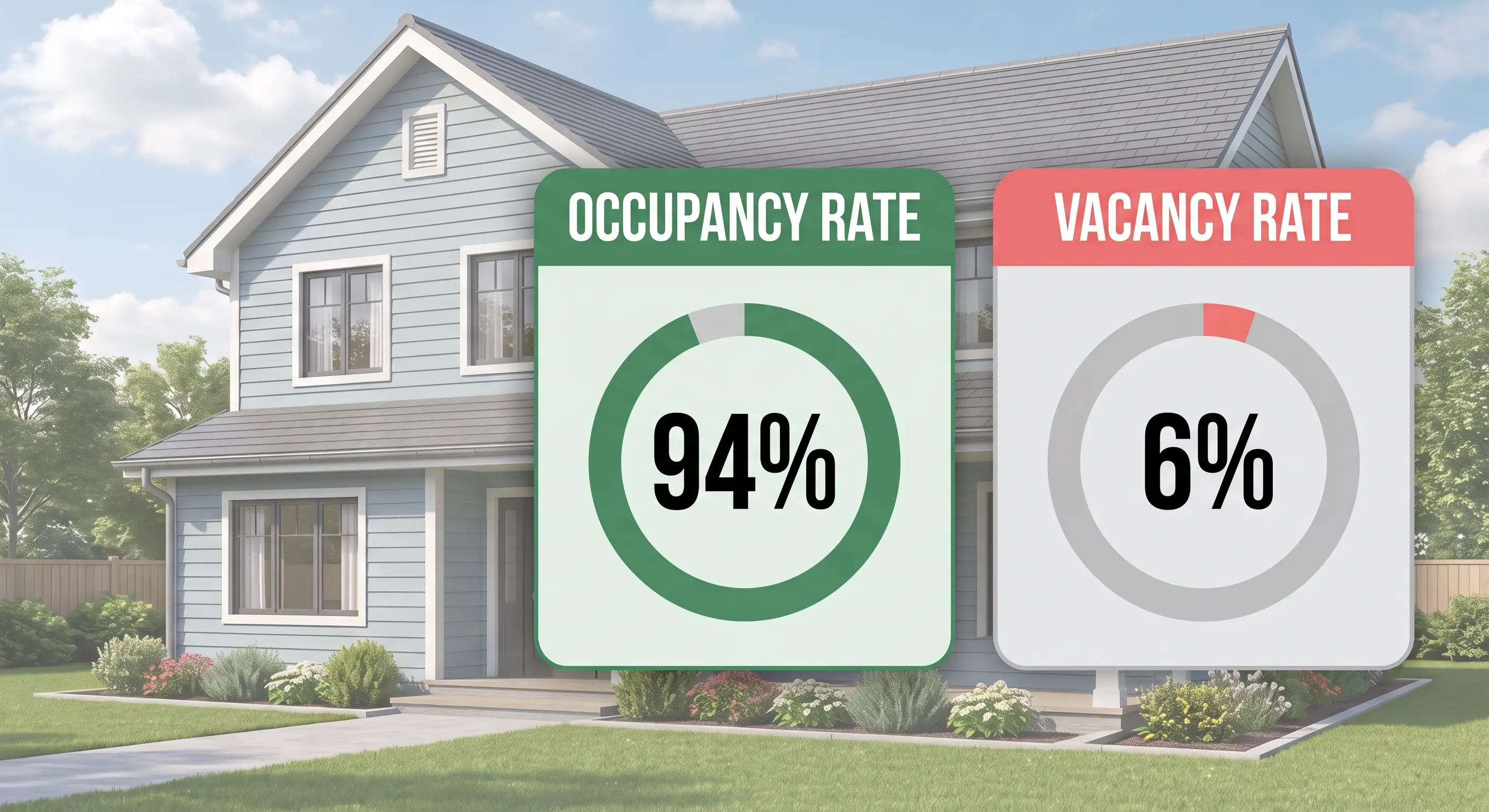
Two numbers on a rental report can tell very different stories about the same property. The national rental vacancy rate was 7.3% in the second quarter of 2026, not statistically different from 7.0% a year earlier, according to the U.S. Census Bureau. U.S. Census Bureau.
For property owners in Peoria, that national figure is only a starting point. Occupancy rate vs. vacancy rate: what Peoria landlords need to know goes deeper than one statistic. These two metrics look like mirror images. Yet each one answers a different question about your rental income.
This guide breaks down both so you can make smarter investment decisions in the local market.
Key Takeaways
- Occupancy rate measures how much of a rental is filled, while vacancy rate measures how much sits empty.
- Economic occupancy reveals actual rent collected and often tells a more accurate story.
- Single-family owners should calculate rates by days vacant rather than units.
- Competitive pricing and strong renewal strategies improve both numbers.
In This Guide:
- What Occupancy Rate and Vacancy Rate Actually Measure
- How to Calculate Each Rate for a Peoria Rental
- Why the Difference Matters for Peoria Landlords
- Proven Ways to Improve Both Rates in Peoria
- Frequently Asked Questions
- The Number That Actually Pays the Mortgage
What Occupancy Rate and Vacancy Rate Actually Measure
Both metrics describe how much of a rental property is earning money. Here are the definitions every Peoria owner should know.
Occupancy Rate Shows the Share of Units or Days Generating Rent
Occupancy rate tells you how much of your property is filled with paying residents. For an apartment complex, that means occupied units divided by total units. For single-family homes, it usually means days occupied over a particular period. A high occupancy rate signals strong rental demand. It also suggests your rental rates fit the local market.
Vacancy Rate Shows the Share Sitting Empty
Vacancy rate flips the lens. It measures the percentage of rental units producing no income at all. Unoccupied units still carry a mortgage payment and property taxes. Every empty day chips away at cash flow. Real estate investors watch this number closely because it hits the bottom line fast.
The Census Bureau defines rental vacancy rate as the share of rental inventory that is vacant and available for rent. |
How to Calculate Each Rate for a Peoria Rental
The formulas are simple once you pick the right unit of measure. Here are the calculations to use.
Divide Occupied Units by Total Units for Occupancy
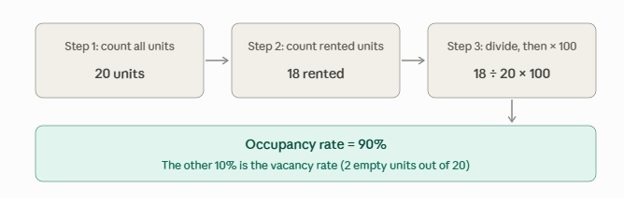
For properties with multiple units, the math is straightforward. Divide occupied units by total units, then multiply by 100. An apartment building with 20 units and 18 tenants has a 90% occupancy rate. Its vacancy rate is 10%. The two numbers always add up to 100%.
Here's a visual breakdown of how that calculation works, step by step.
Days Vacant Work Better for Single-Family Homes
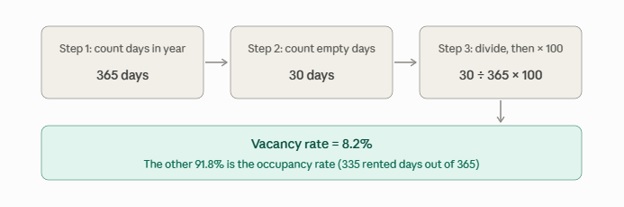
Owners with one rental property need a different approach. One unit is either full or empty, so a unit count doesn't say much. Track days vacant across a full year instead. A Peoria home empty 30 days a year has an 8.2% vacancy rate. That equals 91.8% occupancy. This method works for any single-family rental or small portfolio of rental homes.
To simplify, here's a quick visual that walks through the calculation step by step.
Tracking Both Monthly and Annually Reveals Patterns
A single snapshot can mislead you. Monthly tracking catches problems early, like a slow lease-up or a spike in move-outs. Annual numbers show the bigger trend. Together, they paint a clear picture of your property's financial performance over time.
Why the Difference Matters for Peoria Landlords
Choosing the wrong metric can make a struggling rental look healthy. Here are the reasons both numbers deserve attention.
- A high occupancy rate can hide lost income. Below-market rent prices and weak rent collection quietly erode potential rental income. Economic occupancy reveals your true potential income.
- Vacancy rate is the better market benchmark. It's the standard across the real estate industry, so comparing against similar properties is easy. Use the Census average vacancy rate or local reports for a particular area.
- Rates vary depending on property type and geographic area. A consistently high vacancy rate compared to nearby rentals usually signals a pricing or condition issue.
- Lenders and buyers review both figures. Lenders use vacancy and occupancy rates to judge risk, while buyers use them to gauge the overall value of an investment property. A lower vacancy rate makes your property more attractive when investment opportunities arise.
Every empty week costs Peoria owners real money. Ultimate Properties handles rental marketing and tenant placement to get homes leased with qualified residents. Schedule a rental analysis with the team today.
Proven Ways to Improve Both Rates in Peoria
Small changes in pricing and tenant care add up quickly. Market conditions and economic conditions shift, so last year's approach may not fit today's real estate market. Here are the strategies that move the needle most.
- Price rent against local comps. Rent that's too high leaves units sitting. Check rent prices on similar rental homes in Peoria before every listing, since overall demand shifts with the seasons.
- Market before the lease ends. Listing 30 to 60 days ahead gives you time to screen quality tenants. In high-demand periods, new tenants may be lined up before the old ones leave.
- Prioritize renewals. Tenant turnover drives most vacant rental properties. Keeping long-term tenants is the lower-cost option, and better tenant retention means fewer empty units and steadier rental income.
- Handle maintenance fast. Respond to maintenance requests quickly, especially when AC problems hit during Peoria summers. Regular property maintenance keeps good residents happy and protects the home between leases.
Frequently Asked Questions
Q: Do units offline for renovation count as vacant?
Most operators track them separately as down units. Whichever method you choose, apply it consistently so month-to-month comparisons stay accurate.
Q: Should landlords lower rent to reduce vacancy?
Often, yes. A $50 monthly cut on a $2,000 rental costs $600 a year. One vacant month costs $2,000, so a small reduction can prevent a high vacancy rate from eating into returns.
Q: Do short-term rentals use the same occupancy formula?
Short-term rentals divide nights booked by nights available. Those figures behave differently from long-term rentals, so the two aren't directly comparable.
The Number That Actually Pays the Mortgage
Occupancy tells you how full your rental is. Vacancy and economic occupancy tell you what it truly earns. Most landlords focus on one and ignore the other. Smart real estate investing means tracking both.
Zero vacancy sounds ideal, but it's rarely realistic. Some turnover is normal in any rental market. The goal is keeping empty days short and rent flowing steadily. Several factors shape your numbers, but pricing and tenant experience sit at the top of the list.
Landlord responsibilities grow with every property you add. For local landlords balancing a busy schedule, professional property management takes the guesswork out of both metrics. A good property manager keeps a close eye on the numbers that shape your real estate returns.
Steady income starts with a rental that stays leased. Partner with Ultimate Properties today to get started.